Wednesday, 21 August 2013

Utterly Untrue


Michael Haneke is one of my favourite film directors. His film, The White Ribbon would be in my top ten films – if I had such a list. It opens with a voice-over by an elderly-sounding narrator:

I do not know if the story I want to tell you is entirely true. Some of it, I know only by hearsay. After so many years, a lot of it is still obscure, and many questions remain unanswered.


As the film unfolds, and indeed, ends, the strange events that are acted and narrated are left unexplained. The audience is left to draw its own conclusions, if they are able.


If I say that everything I write is “utterly untrue,” I would be lying. According to one of the characters in my Phone-Box Tales, writing poetry is ‘a process, a craft, a sculpting of language.’  And it certainly isn’t auto-biographical, even though much poetry uses a 1st-person perspective, or a “persona.”

The same can be said for fiction. Writers cannot simply rely on undiluted imagination, romantic inspiration or plain perspiration. Instead, they beg, steal or burrow ideas; transpose, translate and transform them into lies that tell the reader, performer, or listener about the truth. Therefore, when I say that all my Phone-Box Tales are based on my own experiences, observations, overheard conversations, stolen snippets and scavenged stories; this is the truth. But the result?

Let others judge. Not with opinions, criticism, scepticism or malicious vitriol. Nor with that ridiculous star-rating that seems to plague reviewers and performers alike: at the Edinburgh Fringe, anything less than ★★★★ is hardly worth the cost of a staple to attach a scrap of paper to a flyer. But let the audience, when they hear my writing performed, decide how it moves them. Is what they hear believable, if not entirely credible? Does it generate laughter, anger, disgust, or guilty pleasure?

Hopefully, it will leave them with more unanswered questions. Such as: who reviewed this show as: ‘Utterly untrue’- ★★★★★ in throughtheturretwindow@blogspot.com ? Well, me, of course, just now. I challenge my audience to award stars according to their conscience. Meanwhile, I must go and buy some staples.

 
Tales of unrequited love, jealousy, and abandonment, all set in, featuring, or mentioning that symbol of severed communication: the Phone-Box.
Not suitable for children.
Nor adults, really.
Nor pets.


Venue 71, No. 4, Picardy Place, aka ‘The Fiddler’s Elbow,’ somewhere between Greenside Place and Broughton St.


Monday, 12 August 2013

I guess that's why they call it The Blues


So, we're half-way through August in the Festival City, when Art and Culture collide with politics and military might, not to mention a bag-full 'o pipes.  Earlier in the festivities a massive passenger-jet plane flew low over the castle. Only those who live here thought this unusual. If you live in, say, Hounslow in West London, low-flying planes are an everyday occurrence. This was, in fact, the maiden flight of the new Boeing 787, the 'Dreamliner.'

Yet, at the start of every Tattoo ‘performance’ – a military parade that is supposed to symbolise a celebration of the end of battle or fighting or hostility or whatever language you like to use to describe it – there is a fly-past of deadly, angry, lethal aircraft that cannot fail to draw attention to the crowds below, not only in the Tattoo Stadium.

For every cloud there is a silver lining. And, despite my revivified irritation and anger at the war-planes that fly over our city, I am glad that there are some who consider the incredible achievement and advancement of science that has led to the wonders of flight (not designed for violence) to be worthy of a Festival audience, even if most of those on the ground were oblivious or unaware that something incredible had happened in the skies above them.  I suppose most of them were too busy promoting their own shows. Or were, like the torturer's horse in Auden’s poem, busy scratching their bum while Icarus, having flown too close to the sun, fell from grace.

About suffering they were never wrong, The Old Masters.

Breaking from the festivities, in the next of my sequence of Blue poems, the word-play on the number eight is severely compromised by human activity: every celebration, achievement and accomplishment is annulled by our ability to deconstruct and maim. Even the ‘blues’ cannot find respite in music’s tempered scale. We all wear that theatrical disguise, where one mask is crying and the other, laughing. I could risk a clichĂ© and say, two sides of the same coin. If only life were that simple.


Twelve Tones of Blue


Canto VIII


"After the Feast," they said, "Let's give it eight days."


They named the month October, and added two more;

Divided the character two by four, then constructed the enneagram;

The elements split stably into octaves, the atom into a W.M.D;

The octahedron and octagon confounded the Rubik's Cube;

C8 H18 became petroleum’s numeric; America stepped on the gas;

In octal notation, computers divided a base of eight implausibly by three;

And (in 1904) a piece of folded paper became an eight-page manifesto.

But they had music, and tempered the scale to a leap of twelve semitones.


Then someone invented the blues.


Sunday, 28 July 2013

Pouring Rain? Must be Festival in Edinburgh!

Anyone who has read this blog for a few years will perhaps remember that, during 2011, I wrote about my obsession with phone-boxes. To put this in a nutshell (though you’re welcome to plunder the archive) I started taking pictures of red phone-boxes when British telecom started to remove them from our streets and lanes.  I’ve taken hundreds of pictures over the years, randomly and without method. I’ve also been given plenty of phone-box tat (kind of serves me right) by friends who now associate me with the phone-box.

A couple of years ago, studying Creative Writing with the OU, in the ‘life-writing’ section of the course we were encouraged to find a ‘thread’ that might link episodes of our life-story. Naturally, I choose my old friend the phone-box. This has since unleashed a flow of creativity, including poetry, plays, and stories. I am keen to point out that, despite the association with the phone-box, none of my writing is about me. It is fiction. Why do I need to say this?

Cue advert for this year’s Festival. My show is in the PBH Free Festival, as part of the Spoken-Word strand that is now in its second year at the Edinburgh Fringe. I will be performing, with actor Ashley McLean, stories of unrequited love, jealousy, and abandonment, all set in, featuring, or mentioning that symbol of severed communication: the Phone-Box. I have performed some of these pieces over the last year or so, at events mentioned elsewhere on this blog.  

 
Besides bits of singing, reviewing, and flyering (for other shows as well as my own) I’ll be participating in a project called QUIET FOREST being put together by the spoken-word collective, Inky Fingers. On one day only, there will be a host of innovative installations of poetry in the Forest CafĂ©. My Gormley-inspired sequence, Walking on the Water, will be shown as poetry-and-photographs side-by-side, and possibly with a bit of background music. Maybe Antony Gormley himself will turn up!


And finally, still basking in the glory of having won the Inky Fingers Bike-Poetry Slam last month with a three-part poem based on my short-story Spoke/Unspoken, I will be making my debut at the Edinburgh International Book Festival, reading that very story. Edinburgh is (though it barely needs spoken) a City of Literature, which is why I am pleased to be participating in the Edinburgh City of Literature ‘StoryShop,’ where emerging local writers get to perform their work in the Spiegeltent at 4pm during the Book Festival. I will be there on the last day: August 26th.


Anyway, that's enough blatant self-promotion. I’m off to photograph another phone-box…

Friday, 12 July 2013

Royal Blues

A week ago while resident at Holyrood, The Queen visited a place called Niddrie.  This may come as a surprise to those who know this area; it’s not what you’d call affluent, situated on Edinburgh’s inner-city, otherwise known as the ‘outer-ring.’ Nor is it the sort of neighbourhood where you’d leave anything in the back of your car – valuable or otherwise.

While much has been done to improve the area over the past ten years, knocking down most of the grey tower-blocks and building new, colourful housing, there are still stretches of wasteland, boarded-up shops and pubs, and signs of urban poverty that are hidden from, or largely unseen by Edinburgh’s tourists, Royal Visitors, and Festival-attendees.

There are also around Niddrie and Craigmillar various community centres and projects, the odd bit of modern art, a new library, and some hidden gems of historical and spiritual interest, some of which only come to light on Doors Open Days in September. One such place is the Thistle Foundation, a community for adults with special needs.

When only-child Robin Tudsbury (of the Blues and Royals – whatever that means) was on duty in the 2nd World War, his parents Lord and Lady Tudsbury were planning to set up a centre for ‘disabled ex-servicemen.’ Shortly before the war ended, Robin was killed in action, so his parents decided to build a chapel in his memory, naming it The Robin Chapel.
 

This Chapel – apart from being of great artistic value and beauty, with its simple, Baronial architecture, exquisite carvings, and stunning stained-glass depicting scenes from Bunyan’s A Pilgrim’s Progress – is a fitting tribute, in that it was set up to be a ‘non-denominational’ (what we now call, ecumenical) ‘temple of reconciliation.’


Glossing over the Royal connections, which interest me less than the military background, my part in this Official Visit – celebrating 60 years of the Thistle Foundation – was because in my ‘other life’ (as a professional singer) I am part of the choir that sings regularly in The Robin Chapel, performing music of a cathedral-style choral tradition.
 
I’ve made my thoughts clear on things Military and Monarchy elsewhere on this blog. Suffice it to say, I found the experience of singing God Save The Queen with the very women sitting a few feet away extremely surreal. Whether God (again, for my views, see elsewhere) poured bounteous gifts on her as we sang, it is hard to say. But I can report that for the duration of this ridiculous anthem, God did indeed save the Queen. Which was nice of God.

After The Queen and Prince Edward (who was kind enough to personally thank the choir) went off to visit less privileged people of Niddrie, we all got on with drinking The Thistle Foundation’s wine and eating salmon sandwiches. With her entourage of high security, accompanying military brass and heavy police presence dissipated, Niddrie-normality returned. One of our visitors (a former Robin Chapel musician) had had his car window smashed.

I guess The Queen, God, or any of Robin’s former Division couldn’t save that from happening. God’s promises to humankind are pretty vague without the vagaries of Church and State staking their claim. When God tried to wipe the slate clean with a cataclysmic flood, the subsequent rainbow was some kind of promise, apparently.

I see it this way: whatever social category, strata, or economic grade we belong to; whatever belief-system, or philosophy we subscribe to: we are all the same. God rains and shines on everyone. The amorphous rainbow is a sign perhaps that humans have the capacity for peace and reconciliation. That is why I choose to sing at The Robin Chapel. Long may it reign!

But while we wait for Kingdom Come, here’s this month’s offering from my poem-cycle:


Twelve Tones of Blue


Canto VII:  Seven is a popular numeral, but flawed by the imagination’s limitations.


Canto VII
 
The Joys of Mary
The Days of the Week
The Deadly Sins Seven
The Layers of Heaven
The Plagues of Israel
The Trumpets of Wrath
Th'Amorphous Spectrum that Bows across the Damp Blue Sky


Sunday, 30 June 2013

Inspiration

People in Edinburgh familiar with my spoken-word performances will know that images often accompany my writing. Recently I performed my sequence Walking on the Water – inspired by Antony Gormley’s installation along the Waters of Leith, 6 Times. Using my own photographs as visual aids, and interspersing the six sections with Gregorian plainchant made the performance memorable, certainly, if a bit weird.

Combining aspects of the arts is not only important to me as a writer; it is essential to me as an artist. As well as engaging with all art-forms at some level, it is important to support other emerging artists. This year, I went to four end-of-year shows featuring work of students or graduands of our various art colleges. And what a treat it was!

At Edinburgh College of Art, I was able to visit all the departments, over several visits. Being slightly biased, I was particularly pleased to see work by people I know. In Illustration, I enjoyed seeing the intricate paper-cuttings of Alice Spicer. Alice is also a writer, and her work effectively combines both disciplines. alicebspicer.com

Another illustrator, Jode Pankhurst (who has illustrated one of my poems, which may or may not be published as you read this) combines illustration and ceramics to produce stunning, original and moving work. Call it favouritism, but her work was the highlight for me, and I urge you to visit her website. http://www.jodepankhurst.co.uk/

One work that especially caught my eye and (although I’m bored with this clichĂ©) captured my imagination. Maria Hadam constructed pieces out of cassette tape, stretched in lines across white board frames. Some were very small, others large, and each contained something extremely beguiling; buried sounds, memories, and the transience of technology and life itself, shimmering and changing colour depending on where the viewer stood. I was fortunate to spend some time in conversation with the artist, whose website is here: http://www.mariahadam.com/

Deep in Leith is a hidden gem that I’d not visited before: the Leith School of Art. A friend who had a picture displayed invited me to the end-of-year show; a curious mix and wide range of talent and ability, from folk who are perhaps following a dream or a passion for art, and others who having completed a foundation level are destined for greater things, whether or not they go on to established Art Colleges. 
 

I cannot claim to know about the technicality of painting, but I’m picked out one artist whose work I found work profoundly moving on many levels. In her artist statement, Emily Ponsonby said, ‘Through multiple layers of oil, varnish and wax I aim to interpret the essence of my model’s personality and what makes them tick.’

I was immediately impressed by the scale and realism of these portraits, but failed at first to pick up on one essential element. My friend, who I eventually found in the warren of studios in this redundant church, said to me, ‘But did you smell the paintings?’ I confessed I had not. She told me, ‘They smell of honey.’

So we went back to view them, and at that point the artist was having her picture taken with the model of one of her pictures: a beautiful, rugged-looking man with a mass of grey hair and a beard – not the easiest of subjects – in front of his portrait. He was even wearing the same jumper! There was a feeling of pride, pleasure, and above all, a visible rapport between the artist and sitter. http://emilyponsonby.com/

In my conversation with Maria Hadam, at the E.C.A. show, we discussed how rarely people are truly moved by visual art, certainly not in the way other art forms move us. We are stirred by music, provoked by theatre; we laugh at comedy and weep in the movies (well, some do) Perhaps it is our sense of reserve: it would seem absurd to stand in a gallery, laughing at, applauding or sobbing in front of an installation.

And yet, when I returned to the L.S.A. in Leith to have another look at Emily’s paintings with fewer people around, I got up close to the picture, observed the way the layers of wax and paint were built up to give the work immense depth and intensity; and then I breathed in deeply (as a singer might) through my nose. Even more than the joy of seeing ‘Gerry’ in front of his picture, I was quite overcome and found myself welling up. Get a grip, I told myself!

But the thing that really moved me was the thought that this experience (unless I were to put my money where my emotion was and buy one) was ephemeral and, being of the moment, in that sense, unique. What’s more, her work spoke on more levels of eloquence than I can hope to articulate in writing.

Interpreting art, especially modern art, is hard. The Death-to-Death show at the Modern Art Gallery in Edinburgh is tough, since so much of it is provocatively weird, frankly. The multi-sensory experience of the Ernesto Neto installation is another example of how nothing needs explained when experiencing art (although, having heard Neto speak recently, he certainly has much to say, and every word is a gem!)

If the ‘artist’s statement’ should say anything, save explaining or justifying the work we may struggle to interpret, it should contain a glimpse of what has inspired them.

So, what inspires me to write? Art, life, a compulsion to make sense of the world and the transient experience of our short time on earth: all of these. But above all, it is people. As I go about galleries, museums, shops, or sit in cafés, on buses or wander the streets, I am soaking up stories, leaching lives, inhaling the air they breathe.

In these last weeks, I have been inspired, vitalised, moved and thrilled by the new art I have seen, much of which has been greatly inspired. At its most basic, inspiration means ‘breathing in.’ Thanks to Emily Ponsonby, I must remember when I look at all art to breath in deeply, through my nose, and be inspired in every sense.

Wednesday, 12 June 2013

Humans Remain

I’ve said it before, but here goes.  The Bible, and especially the Gospel narrative, is a great source of inspiration to me.  Not least because there’s a lot of weird shit in there that no amount of warped imagination could ever invent.  This means that scripture must be open to an exceedingly broad interpretation, no matter what a person’s understanding or religious inclination may be.  Except to say that some interpretation is wrong (with scant apologies to those who disagree) – especially when the stories simply do not chime with the world we live in today. 

Last month, a letter was published in ‘the press’ (shame on them, but given that most newspapers are amoral why bother complaining or naming them: that is their modus operandi) publicly attacking the ministry of an ordained priest in the Scottish Episcopal Church.  Why?  Because she (shock, horror) is a woman.  I will, for what it’s worth, name-and-shame the letter-writer, a Mr Donald J Morrison of 85 Old Edinburgh Road, Inverness.  This man is a bigot, a misogynist, and a theologically-ignorant fool.  But don’t take my word for it: Google him, and make up your own mind.

Or, let me cite a couple of sentences in his pathetic missive, and allow whoever reads this to decide. Of the 196 women who are ministers in the Church of Scotland (according to his figures which I don’t entirely trust) he claims, “This is 196 too many.” He seems to think that “The very fact that they are women debars them from the Christian ministry,” and attempts to back this up with a Biblical quotation which he considers “best to hear what absolute truth has to clearly say.”  Apparently, a woman may be “elegant” (I think he meant to say ‘eloquent,’ which clearly he is not) in “public speaking, or proficient in her knowledge of Biblical theology” – again, I question his proficiency. 

It seems, according to Mr Morrison, “The only activity women are restricted from is teaching or having spiritual authority over men.”  And yet he suggests that women “may rise up and hold high office in a nation, just like Queen Elizabeth and as the late Mrs Margaret Thatcher did.”  That will be the present Queen, head of Church-and-State, and former (now deceased, for which I’m only partly glad: I’d rather she hadn’t been born) Prime Minister who was responsible for appointing Bishop Carey to be Archbishop of Canterbury.  Sure, the rot had set in by then, but the Evangelical ascendency in The Church must surely be blamed for the upsurge of aggressive, militant atheism in recent years.


The trouble is, as long as idiots are allowed to vent their views publically; while the various denominations of Christianity are permitted to operate outdated systems of institutionalised human rights violations; and while former Bishops and Archbishops sit in the House of Lords, we are seeing the disintegration of sensible Christianity and the strengthening of that most unholy alliance, Church and State.  Never were there two more incompatible bed-fellows than the Queen and Thatcher, but since disestablishing the Church of England would have seemed as anathema to Maggie as abolishing the Monarchy, so they remained, tucked up and – like all single-sex marriages, according to our deluded Mr Morrison, though not perhaps his choice of phrase – fucked up.

You’ll find his views on same-sex marriage equally derisive.  So, when the House of Lords discusses this, as if they are some kind of legitimate compass of morality, who do we have to put up with? Fucking Bishops who not only should never have been ordained, but who should not be given a seat in The House – least of all by a God who only exists to a limited coterie.  A clichĂ© (but it’s true): the UK is the only one of two democrasies with religious clerics sitting in their Upper Chamber of Politics.  The other is Iran, but I don’t think they have got retired, defunct and idiotic Bishops.  


Take, for example.  Nazir-Ali, former Bishop of Rochester.  What an idiot.  Suggesting that the Queen would break her Coronation Oath by letting her Government vote for gay marriage!  Oh for fuck’s sake, Brenda: nobody gives a toss about your holy oath.  And the move to persuade Bishops to abstain from voting, in order to avoid this issue of disestablishment, makes a mockery of everyone involved – from The Queen right down to that ridiculous man in Inverness, who tells us that Her Majesty has no authority to advise him on matters of theology.  Sorry, Mr Morrison: it seems she does.  Unless, you’re up for disestablishing the Church, or abolishing the Monarchy?

But that, alas, isn’t likely to happen imminently.  So let’s do something different about this.  Gay marriage – the right for two people to publically declare their love for one another – is nothing to do with Christianity.  It’s about conferring what should be the inalienable right on all people, without prejudice, to participate fully in the society in which they live.  It is nothing to do with procreation, sexuality or bodily functions – although all of these are naturally a part of being human.  It is about recognising that love is what brings two people together, and that should be celebrated. 

Yes, Love.

Suffice it to say that, in the Bible, we are instructed to ‘love one another with a pure heart, fervently.’  In the spirit of pick-and-mix theology, we could easily find another quote to counter that. But that’s just petty.  Let’s look instead at the person of Christ, who was just an ordinary man, who did all the things that we do, yet had a vision of a world that could be lived in harmoniously by all, no matter what their beliefs.  Through love.  Unless, of course, they were hypocrites – like the ‘Church’ of his time.  And like the Church in our time.  And the government.  And me too, I guess.  I ought to love Mr Morrison of Inverness.  Perhaps I do, even though he’s a poor, deluded fool.  

And so to this month’s Canto from my poem-sequence, pointing out that Christ was only human. 


Twelve Tones of Blue


Canto VI:   The numbers of the beast; basic bodily functions, surely experienced by Christ.

Canto VI


Welcome to the Great High Feast;

I’ll gorge his flesh and rout the devil:

This is the human form to which we all relate.


The second number of the beast,

Shooting up through cold blue steel,

Enters the blood with an animal urge to procreate.


Of all the numbers does the least

Attractive seem the most primeval.

But didn’t Christ himself digest, procreate and defecate?


Monday, 27 May 2013

The Blog Spot

This week I will be going to (or will have gone, depending on when you read/read this) the “Literary Salon.”  Posh? Pretentious? Puzzling? Not really: it’s just a bunch of folk from all walks of Literary Life, from fledgling to famous, gathering in a pub on The Mound to network and chat.  Since the theme of this month’s Salon is blogging, I thought I’d give a wee ‘shout-out’ to the Edinburgh City of Literature who run this shin-dig (and to Napier University, and the Wash Bar who host it.)

Perhaps I should ask myself a few questions about my bloggery. Here’s one of those self-interviews that these blogger-types do…

Why do you blog?

Why do I write?  Writing is a compulsion; I can’t imagine not writing.  It’s my way of trying to making sense of the world, an attempt to understand life, and connect with people through my writing.  There’s no point in writing in a vacuum.  But if a writer plans to share their writing, whether through publishing, performing, or online, he or she should make the words readable, enjoyable, and well-crafted.  I use my blog, therefore, as a means of disciplining myself to write frequently and hopefully, better.

What do you blog?


Mainly about me; what I am doing in my writing, some examples of my work (usually poetry… I also write fiction and drama), and my views about topical or political issues. Each year I tend to have a theme.  Last year it was 26 Treasures; the year before was phone-boxes, and my dad’s Glasgow Schooldays.  This year, I am posting poems from my sequence, Twelve Tones of Blue on the 12th day of the month.

Is this your first blog; do you contribute to other blogs?

At the end of my 26 Treasures project, I was invited to contribute to The Feast Bowl, the Museum of Scotland’s blog. Here it is:  http://feastbowl.wordpress.com/2013/03/22/26-treasures-a-year-of-sestudes/ I’ve written and contributed to other blogs that are no longer extant; one on the horrors of Sex Trafficking, as part of a project inspired by Stop The Traffik and Amnesty International’s Stop Violence Against Women campaigns.  There are many other organisations who champion this cause also.  I had another blog called Not Everything in Black and White… on which I posted some of my photography (before the days of Flickr) and quite a lot of angry ranting about the shitty world.  Not good.

How did you come up with the name for this blog?

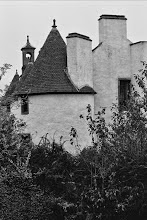
For a long while, I languished behind the romantic idea of a writer sitting in a turret or an ivory tower playing out the angst of a suffering artist.  This had to stop.  This blog was my way of coming out of a long period of reclusion and saying to my friends: I’m back, I’m okay, I’m still writing. The Tin Angel is a reference to a Joni Mitchell song and the Tin Man from the Wizard of Oz.  As the years progressed, I made this blog, and my pen-name, public.

Do you follow other blogs?

I have to confess I’m not an avid blog-reader.  I’d like to mention three lovely writers, regular attenders at the Lit Salon, whose blogs I dip into from time to time.  Emily Dodd writes about her many projects, and how she obtained a joke about otter-poo at a Literary Salon! http://auntyemily.wordpress.com/  Caroline Von Schmalensee, http://carolinevonschmalensee.com/words-with-sounds-for-illicit-ink/  mentioned me on her website, in a piece about spoken words.  And Lynsey May, who writes about writing and the ‘turreted’ experience for a natural introvert.  http://blog.lynseymay.com/

All female writers, as it happens… I wonder if this is a trend in blog-land? Perhaps we’ll all find out at Tuesday’s Literary Salon?
http://www.cityofliterature.com/projects.aspx?sec=6&pid=27&item=484